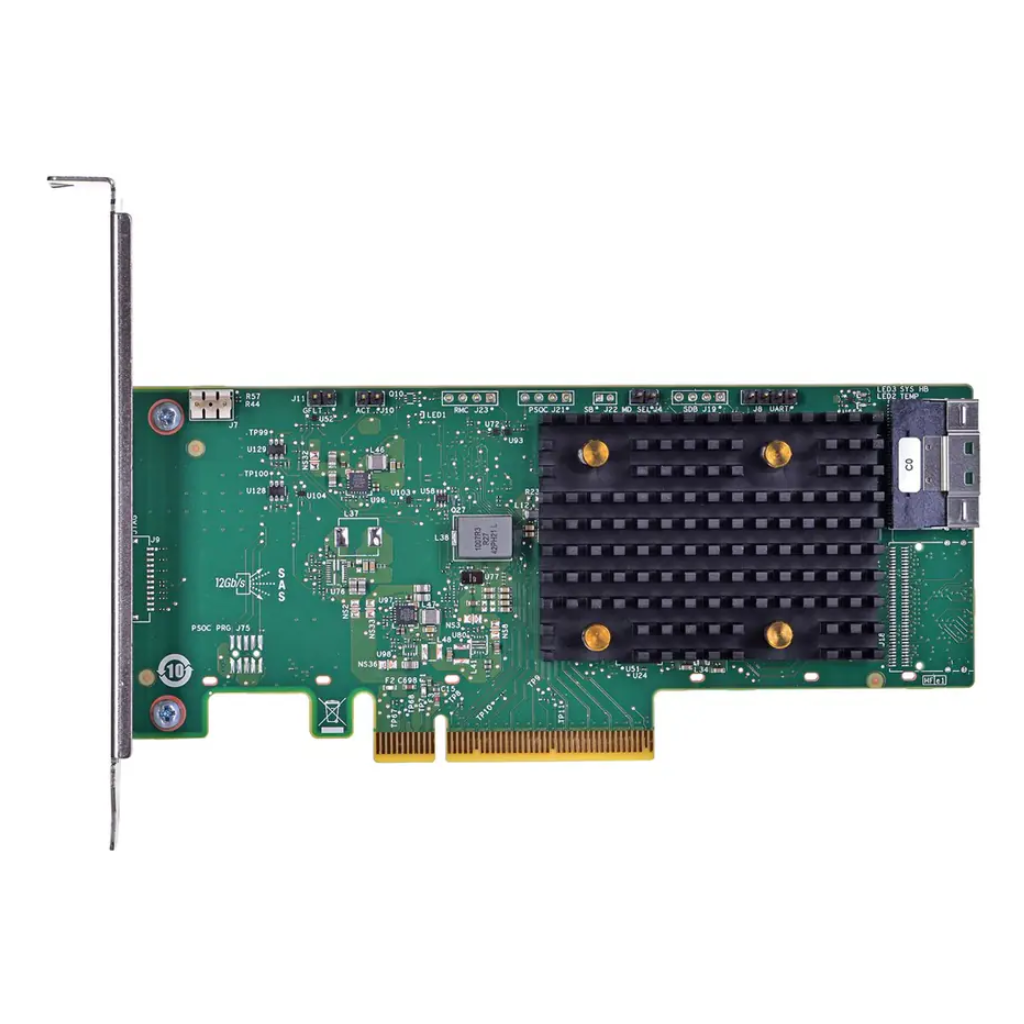
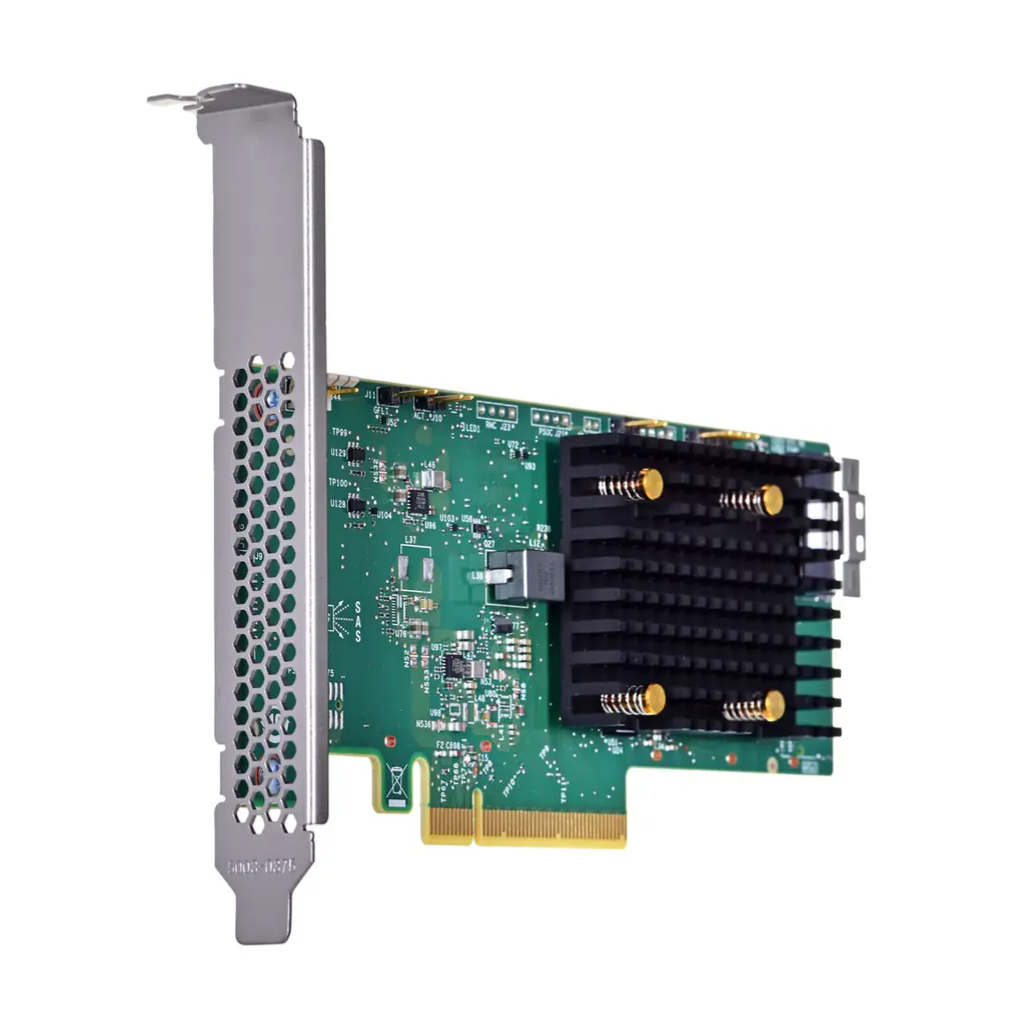
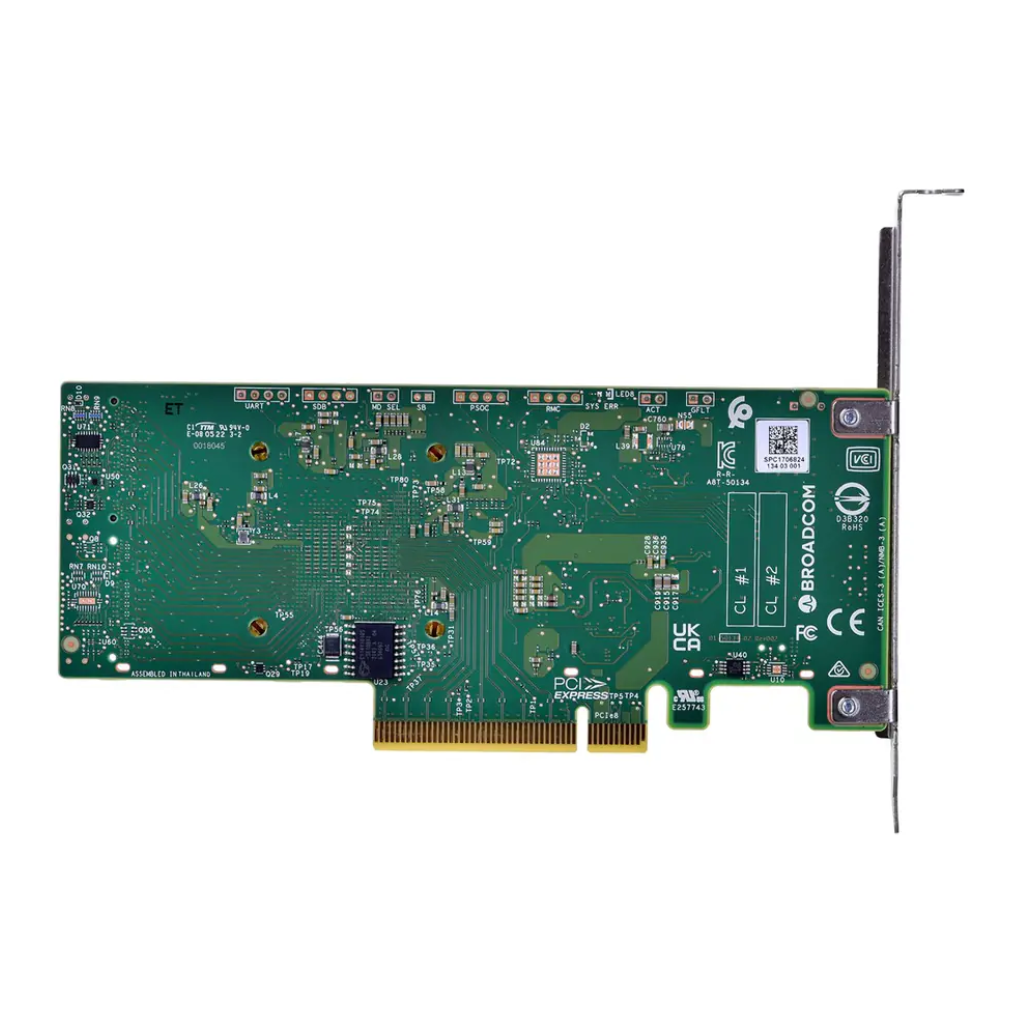
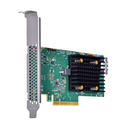
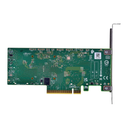
Broadcom MegaRAID 9540-8i 8-Port 12Gb/s SAS/SATA RAID Controller
Broadcom MegaRAID 9540-8i 8-Port 12Gb/s SAS/SATA RAID Controller
Data Transfer Rates:12Gb/s SAS and 16GT/s PCIe Gen4 (NVMe) compliant
Devices Supported: SAS/SATA: 63, NVMe: 4
Generation: 12 Gb/s
Host Bus Type: x8 lane PCI Express 4.0
I/O Processor / SAS Controller: SAS3808
Internal Connectors: 1 x8 SFF-8654 (SlimSAS)
Internal Ports: 8
Management Software: LSI Storage Authority (LSA), StorCLI (Command-Line Interface), HII (UEFI Human Interface Infrastructure)
MTBF: >3,000,000 hours at 40° C
Operating Temperature°C: 0°C to 55°C
OS: Microsoft Windows, VMware vSphere/ESXi, Red Hat Enterprise Linux, SuSE Linux, Ubuntu Linux, Citrix XenServer, CentOS Linux, Debian Linux, Oracle Enterprise Linux, Fedora, FreeBSD
Physical Dimensions: 155.52 (+/-0.13) mm x 68.77 (+/-0.13) mm
RAID Levels: 0, 00, 1, 10
Typical Power: 6.0W
Warranty: 3 months
Overview
The Broadcom MegaRAID 9540-8i is a high-performance 12Gb/s SAS/SATA RAID controller designed for enterprise servers and storage systems. It delivers reliable RAID protection, low latency, and robust scalability for mission-critical workloads. With PCIe Gen4 support and broad OS compatibility, it is optimized for virtualized, database, and data-intensive environments that require consistent high-speed storage access.
Key Features & Detailed Analysis
1. High-Speed Data Transfer
- Supports 12Gb/s SAS and 16GT/s PCIe Gen4 for NVMe compliance
- Provides fast data throughput to meet demanding workloads
- Equipped with 8 internal ports and an x8 PCIe 4.0 host interface
2. Device Support & RAID Capabilities
- Supports up to 63 SAS/SATA devices and 4 NVMe devices
- RAID levels: 0, 00, 1, 10 for flexible data protection and performance
- Ideal for mixed-use storage deployments
3. Advanced Controller & Management
- Uses SAS3808 I/O processor / SAS controller for efficient processing
-
Managed via:
- LSI Storage Authority (LSA) – GUI-based management
- StorCLI – Command-line interface for advanced control
- HII (UEFI interface) – BIOS-level configuration
4. Reliability & Operational Specs
- MTBF: >3,000,000 hours at 40°C
- Operating temperature: 0°C to 55°C
- Typical power consumption: 6.0W – energy-efficient design
5. Physical & Integration Details
- Dimensions: 155.52 mm x 68.77 mm
- Internal connector: 1 x8 SFF-8654 (SlimSAS)
- Compact design suitable for modern server chassis
6. Broad OS Compatibility
- Supports major enterprise operating systems including Windows Server, VMware ESXi/vSphere, Red Hat, SuSE, Ubuntu, CentOS, Debian, Oracle Linux, Fedora, Citrix XenServer, and FreeBSD
7. Warranty & Certifications
- Warranty: 3 months
- Enterprise-grade hardware meets industry standards for reliable deployment
Target Use Cases
1. Enterprise Servers & Storage Arrays
- Ideal for connecting multiple SAS/SATA drives in high-performance storage systems
2. Virtualized Environments
- Supports multiple VMs with fast, low-latency storage access
3. Database & Transactional Workloads
- Optimized for SQL, NoSQL, and other I/O-intensive database applications
4. Backup & Disaster Recovery
- Provides RAID protection to ensure data integrity and redundancy
5. Small to Medium Data Centers
- Suitable for businesses needing scalable, reliable storage expansion
Summary
Strengths
- High-speed 12Gb/s SAS with PCIe Gen4 support
- RAID levels 0, 00, 1, 10 for flexible protection
- Supports up to 63 SAS/SATA and 4 NVMe devices
- Advanced management tools (LSA, StorCLI, HII)
- Reliable with >3M-hour MTBF and low power consumption
- Broad OS compatibility for enterprise deployment
Considerations
- NVMe support limited to 4 devices
- Warranty is relatively short at 3 months
- RAID controller is designed primarily for internal drives (SFF-8654), external expansion may require adapters
Conclusion
The Broadcom MegaRAID 9540-8i offers a reliable, high-speed RAID solution for enterprise servers and storage systems. With support for SAS/SATA drives, RAID protection, and PCIe Gen4, it is ideal for virtualization, databases, and data-intensive workloads where performance, reliability, and scalability are critical.